U.S. Citizenship and Immigration Services (USCIS) has changed when its officers should suggest DNA testing to establish a biological family relationship.
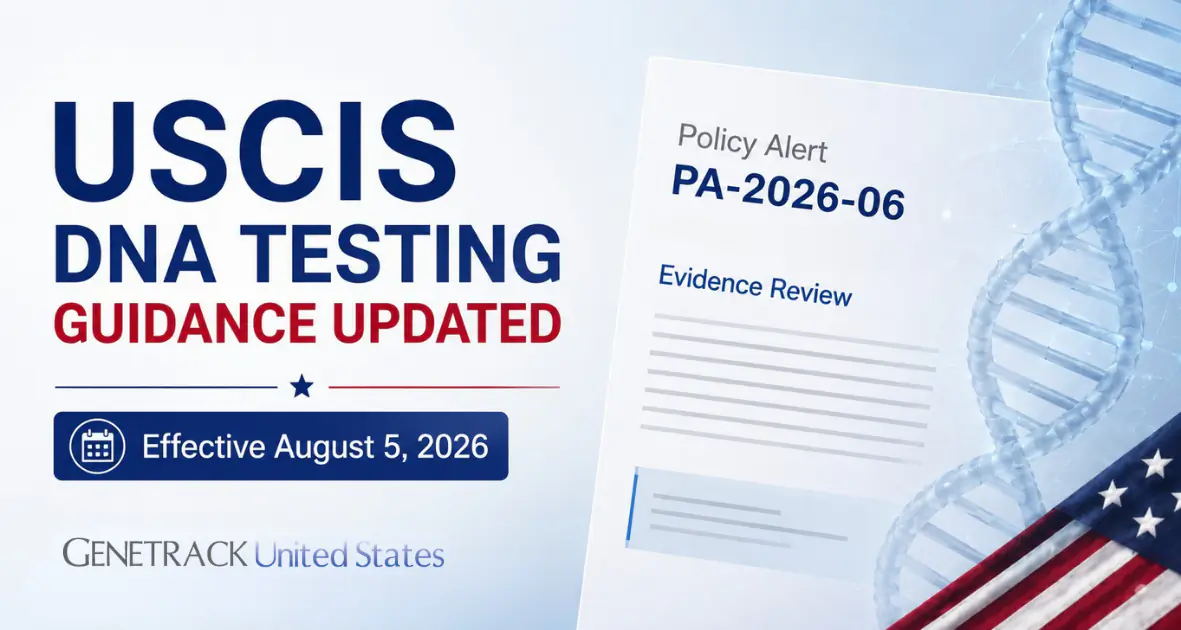
Effective August 5, 2026, USCIS officers must suggest DNA testing as an optional form of evidence in certain cases where a benefit requestor has not adequately established a claimed genetic relationship and the officer determines that additional evidence is necessary. DNA testing remains voluntary; applicants may still use other acceptable evidence to establish the relationship.
This change may result in DNA testing being suggested more frequently in immigration cases involving missing, unavailable, unreliable, or insufficient civil documentation.
Genetrack Biolabs is an AABB-accredited laboratory, and we support applicants through this process from the initial request to final results. If USCIS has asked you to provide DNA evidence, learn more about our AABB-accredited U.S. immigration DNA testing services.
What Changed in USCIS DNA Testing Policy?
The change pertains to the point in the adjudication process at which USCIS officers are instructed to suggest DNA testing.
Previously, USCIS policy generally indicated that an officer could suggest DNA evidence after both primary and secondary evidence were found insufficient to establish a claimed genetic relationship.
Under the guidance issued August 5, 2026, officers must suggest DNA testing when the required primary evidence is unavailable, unreliable, or insufficient to establish the claimed genetic relationship and the officer determines that a request for additional evidence is necessary.
As a practical matter, DNA testing may now be raised earlier in the evidentiary process, rather than only after other categories of evidence have been exhausted.
This change does not indicate that DNA testing will be required in every family-based immigration case.
Does USCIS Now Require DNA Testing?
No. DNA testing remains voluntary.
USCIS cannot require DNA test results to verify a claimed genetic relationship. The new policy requires officers to suggest DNA testing as an option in qualifying situations where additional evidence is needed.
Applicants may instead submit other available evidence that sufficiently establishes the claimed relationship. A DNA test is therefore an additional evidentiary option, not a new universal requirement for family-based immigration applications.
When Might USCIS Suggest an Immigration DNA Test?
USCIS may raise DNA testing when a biological relationship is relevant to eligibility but the required documentary evidence does not adequately establish that relationship.
This may occur, for example, when:
- required civil records are unavailable or cannot be obtained;
- primary records are considered unreliable;
- submitted records raise questions about the claimed biological relationship; or
- the available primary evidence is otherwise insufficient and USCIS determines that additional evidence is necessary.
The specific evidence required will depend on the immigration benefit and circumstances of the case.
Which Immigration Cases Are Affected?
The August 2026 update applies across several types of USCIS adjudications.
USCIS revised Policy Manual provisions covering general evidentiary adjudication, refugee and asylee relative cases, orphan and Hague adoption matters, and citizenship and naturalization cases involving qualifying parent-child relationships.
As a result, the revised DNA guidance may be relevant in several types of proceedings where establishing a genetic family relationship is material to eligibility.
For applicants and petitioners, however, the central rule remains the same: DNA testing is used to help establish a biological relationship when the documentary evidence does not adequately do so.
What Should You Do If USCIS Suggests DNA Testing in an RFE?
If you receive a Request for Evidence (RFE) suggesting DNA testing, review the notice carefully before arranging testing.
As an AABB-accredited laboratory, Genetrack Biolabs handles immigration DNA testing under the specific identification and chain-of-custody procedures required for immigration cases, which differ from those used for a standard at-home DNA test.
Should you decide to proceed with DNA testing, Genetrack can manage your case from initial setup through sample collection and final results. Our laboratory, Genetrack Biolabs Inc./Genex Diagnostics Inc., is included on AABB’s list of accredited relationship testing facilities, which AABB states are deemed acceptable by USCIS for immigration cases.
We coordinate the required sample collection for participants in the United States and overseas. Learn more about how our U.S. immigration DNA testing process works.
Why Does AABB Accreditation Matter for Immigration DNA Testing?
For U.S. immigration DNA testing, AABB accreditation is a requirement of the process.
AABB states that USCIS, U.S. passport agencies, and U.S. embassies accept DNA test results only when the case is initiated by and reported directly from a laboratory or collection and verification site accredited by AABB for relationship testing activities.
Genetrack Biolabs is an AABB-accredited relationship testing laboratory. We follow established standards for participant identification, sample collection and handling, chain of custody, DNA analysis, and reporting.
This process differs from a private home paternity or relationship test. While the underlying DNA analysis may establish the same biological relationship, immigration testing uses controlled procedures to document each participant’s identity and maintain the integrity of every sample throughout the case.
We explain why AABB accreditation matters for U.S. immigration DNA testing in more detail here.
What About DNA Testing for U.S. Immigrant Visas?
The August 5 policy update concerns USCIS, but the U.S. Department of State also has established DNA relationship-testing procedures for immigrant visa cases processed through U.S. embassies and consulates.
The Department of State states that a consular officer may suggest DNA testing when genetic testing appears warranted and other credible evidence of the biological relationship is unavailable. Testing remains voluntary. The laboratory selected for the process must be AABB-accredited.
For participants overseas, we send the appropriate kit directly to the U.S. embassy or consulate, which then coordinates collection with the applicant. Applicants and family members should not independently receive or handle immigration DNA test kits under these procedures.
What Does the August 2026 USCIS Change Mean for Families?
The August 2026 update changes the timing of when DNA testing may be suggested. It does not add a new type of test or change what a DNA test can establish.
For families whose biological relationship is difficult to document through conventional civil records, DNA testing may now be raised earlier, without waiting until both primary and secondary evidence have been exhausted.
We recommend against obtaining a private home DNA test in anticipation of an immigration request. Immigration cases require specific testing and chain-of-custody procedures, and the appropriate process can depend on where each participant is located. If you are unsure how to proceed, we are glad to walk you through your options.
Frequently Asked Questions
Is DNA Testing Mandatory for USCIS Immigration Cases?
No. USCIS DNA testing remains voluntary. The August 5, 2026 guidance requires officers to suggest DNA testing in certain cases where additional evidence is necessary to establish a claimed genetic relationship, but applicants may submit other acceptable evidence instead.
Did USCIS Change Its DNA Testing Rules in 2026?
Yes. USCIS issued Policy Alert PA-2026-06 on August 5, 2026, changing its guidance on when officers should suggest DNA testing during adjudication.
What Type of DNA Laboratory Should I Use for a USCIS Immigration Case?
Genetrack Biolabs is an AABB-accredited relationship testing laboratory and can handle DNA testing for USCIS immigration cases. AABB states that facilities on its accredited relationship-testing list are deemed acceptable by USCIS for immigration cases.
Can a Home Paternity Test Be Submitted to USCIS?
A standard at-home paternity test is not appropriate for USCIS immigration purposes because it does not follow the required immigration testing procedures. Immigration DNA testing must be handled through an AABB-accredited relationship testing facility using controlled identification, sample collection, and chain-of-custody procedures.
If USCIS has suggested DNA testing, Genetrack Biolabs can arrange the appropriate AABB-accredited immigration DNA test and coordinate sample collection for the participants in your case.
Can Family Members Be Tested in Different Countries?
Yes. Immigration DNA cases can involve participants in different locations. For U.S. immigrant visa cases involving participants overseas, Genetrack coordinates sample collection through the appropriate U.S. embassy or consulate under Department of State procedures.
How Do I Start an Immigration DNA Test With Genetrack?
If you have received a USCIS or U.S. embassy request suggesting DNA evidence, submit the request to Genetrack Biolabs. We will determine the appropriate testing and collection procedures based on your case and the location of each participant.
Source: USCIS Policy Alert PA-2026-06: Suggesting DNA Testing When Issuing a Request for Additional Evidence